Tomato Harvest Timing, Explained
When to pick tomatoes, plus a French tomato tart worth making weekly
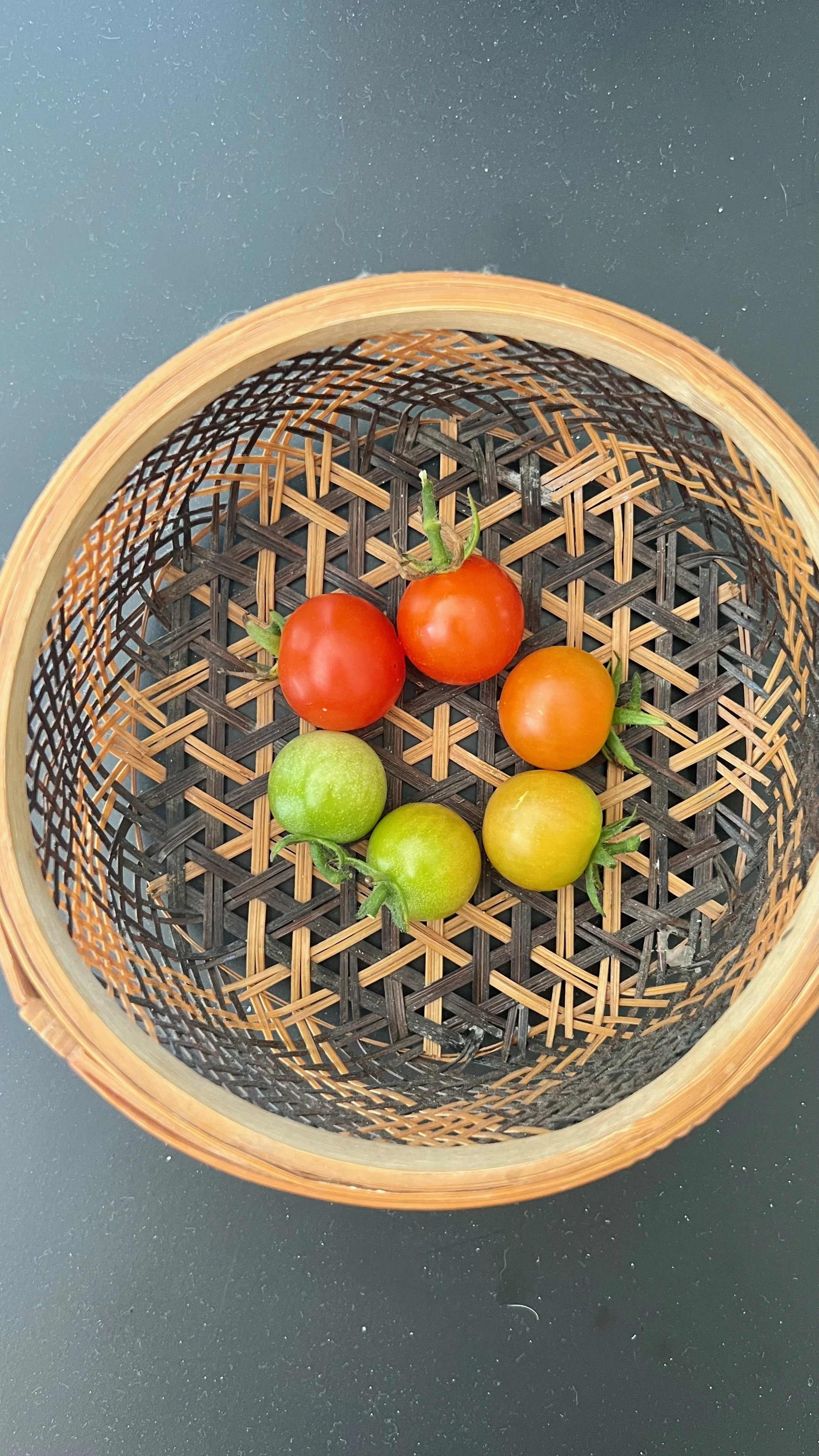
And just like that, we're headed into August. My chile peppers are coming in, zucchini and cucumbers double in size overnight, and (yay!) it's tomato season. I've said this before and I'll say it again: tomatoes are hard. They take a long time to produce, grow in a race against disease, are a bit high maintenance and intimidating when it comes to pruning, and, to top it all off, send mixed signals about harvest time. But oh man, they’re so good. I've gotten a number of texts about tomato readiness over the last few days, so I'm dedicating this week's post to the topic.
The Harvest Point
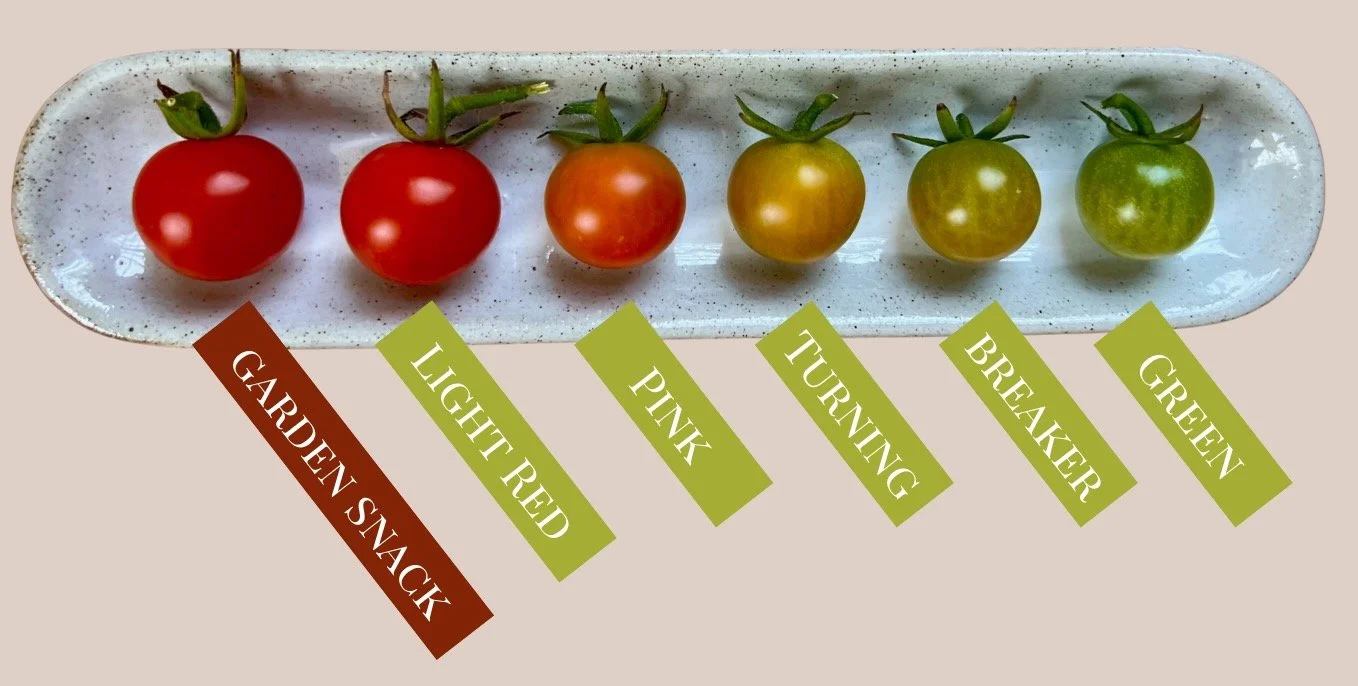
Well before they look tempting, tomatoes can, and should, be harvested. Once they reach the breaker phase, when they just start changing color from green to pink (technically 10%), they can ripen on the counter without sacrificing flavor, quality, or nutrition. The flow of water and nutrients has slowed to a near stop. By the breaker stage, the tomato has already developed the majority of its flavor compounds; the sugars and acids that give tomatoes their taste are largely present. Ripening from here on mostly just finishes the color change and softens the fruit.
Leave them on the vine and you're tempting fate. Only bad things can happen after this point, from critters to splitting skins. Not to be dramatic...
Vine-Ripened, Explained
We've all seen the sign at the grocery store. It's largely a marketing distinction against the alternative. Mass-market tomatoes are picked while still fully green (long before breaker stage) so they can survive long-distance shipping, then are artificially reddened later with ethylene gas in ripening rooms. Commercial "vine-ripe" labeling typically means the tomato was picked around the breaker stage and finished ripening with ethylene during transport. Since "vine-ripened" isn't a strictly regulated term, it functions mostly as a flavor promise rather than a precise description of how the tomato was grown.
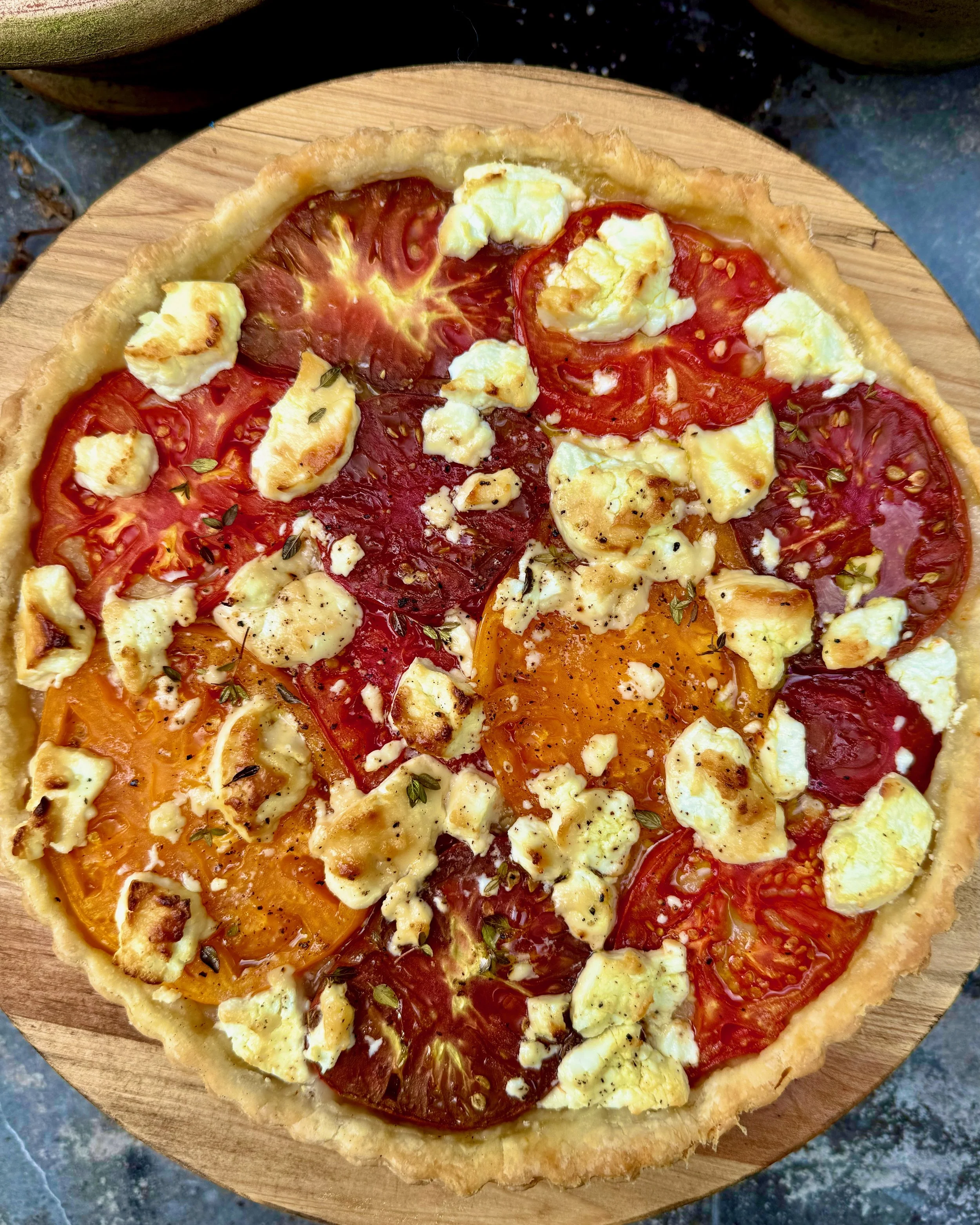
French Tomato Tart
(via David Lebovitz)
I make this weekly, no exaggeration.
INGREDIENTS
Dough
1½ cups (210g) flour
4½ ounces (125g) chilled unsalted butter cut into cubes
½ teaspoon salt
1 large egg
2–3 tablespoons cold water.
Filling
one unbaked tart shell (from the dough above)
Dijon or whole-grain mustard
2–3 large ripe tomatoes or 2 cups cherry tomatoes
2 tablespoons olive oil
salt and freshly ground pepper
2 generous tablespoons chopped fresh herbs (thyme, chives, or tarragon)
8 ounces (250g) fresh or slightly aged goat cheese sliced into rounds
1½ tablespoons honey
INSTRUCTIONS
Combine the flour and salt in a bowl, then work in the butter with your hands or a pastry blender until the mixture looks like coarse cornmeal. Beat the egg with 2 tablespoons of water, make a well in the dry ingredients, and stir in the egg mixture until the dough comes together, adding the extra tablespoon of water if needed. Gather the dough into a ball and roll it out on a lightly floured surface
Fit the dough into a 10 tart pan, pressing it up the sides, and press your fingertips into the base a few times to dock it. Preheat the oven to 425°F.
Spread an even layer of mustard over the base and let it sit a few minutes to dry slightly. Slice the tomatoes and lay them over the mustard in a single layer, then drizzle with the olive oil and season with salt and pepper. Scatter half the herbs on top, arrange the goat cheese rounds over the tomatoes, then add the remaining herbs and, if using, drizzle with honey.
Bake 30 minutes, until the crust is done, tomatoes are tender, and cheese is browned.
From my garden to yours,
Kiera