A Sunny Perennial Edible Planter
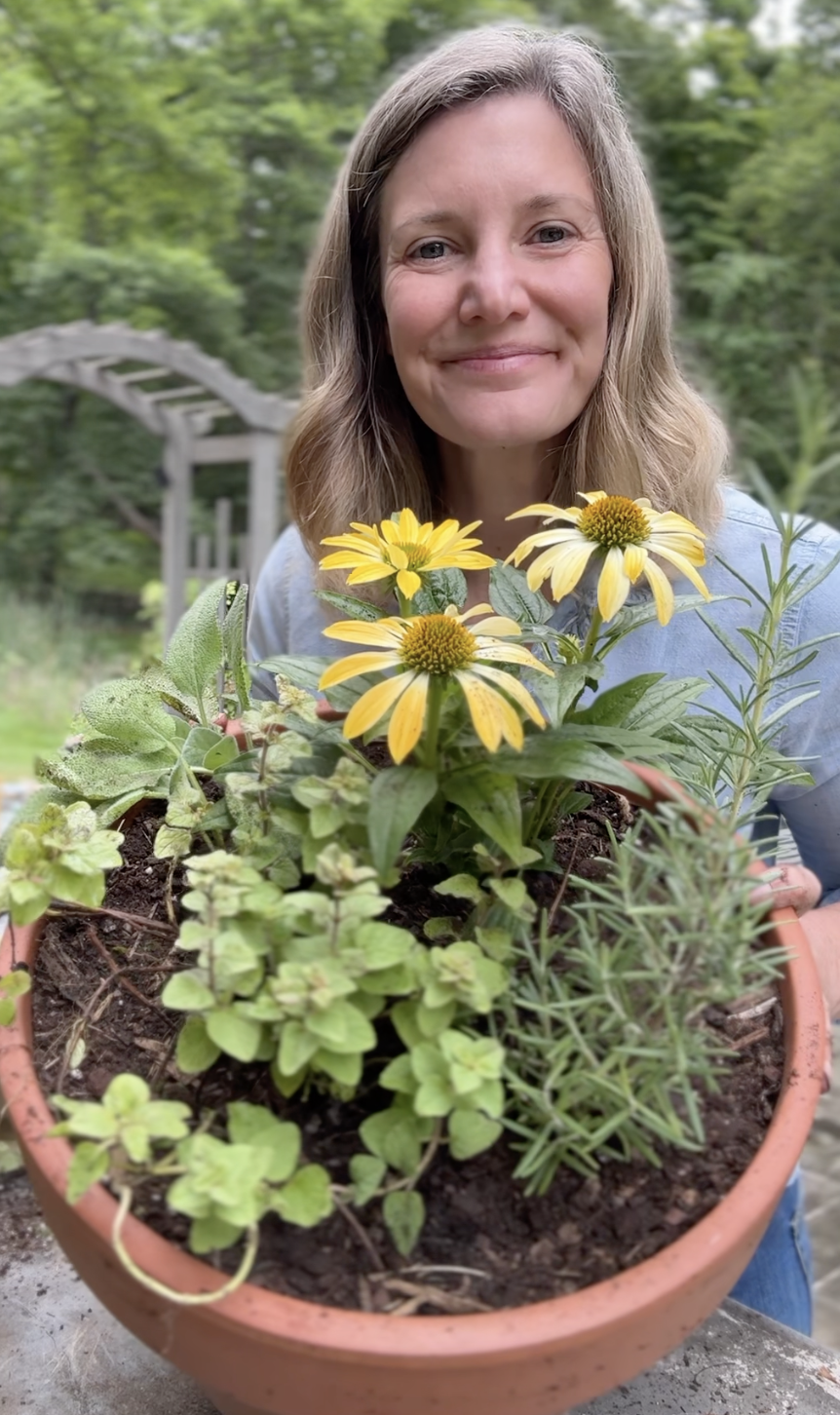
Some people are wizards with planting boxes and their annual planters. I’m in awe of them. It took a number of classes and a lot of trial and error to develop my own style and skill. Now, I look forward to planting up the ever-growing collection of terracotta pots around the terrace. There are a few designs that I redo year after year. This is one of them.
A design with a second act
All four plants, dwarf echinacea, Arp rosemary, common sage, and oregano/thyme, are cold hardy perennials, cosplaying as annuals. Enjoy them in the container all summer, then transplant into raised or in-ground beds in early fall. They'll set their roots before the first frost and return next season closer to their mature size, where they'll keep producing for years.
Echinacea in an Edible Garden
I'll admit I'm biased. As an edible garden designer I look for any reasonable excuse to work echinacea into a planting. However, with hybrid types like Summer Solstice you usually lose the medicinal and edible benefits found in the straight varieties. It’s a trade off. This one stays compact enough for container life while producing warm yellow blooms that pollinators, particularly bumblebees and hoverflies, seek out. Also, the dried seed heads are beautiful through winter if you leave them standing, and are a food source for our birds.
It anchors the back center of the planter, providing height and structure while the herbs fill in around it.
The Herb Trio
Arp rosemary is one of my favorites. One of the most cold hardy rosemary cultivars available, it survives temperatures that would take out standard rosemary, an important consideration for Hudson Valley gardeners and anyone in a zone where rosemary is unreliable.
Common sage brings silvery texture, purple summer blooms that pollinators love, and is the base of more fritters than I can count for apéro. Oregano or thyme fills the remaining space with low, spreading growth and reliable productivity.
The Plan
This design is happiest in full sun, light to medium watering, but no complicated care requirements. A thin layer of mulch reduces how often you need to water.
The free planting plan below includes a planting diagram and materials list so you can take this directly to your local nursery.