Fall Vegetable Gardening: Why Daylight Matters as Much as Frost
timing for your cool season planting
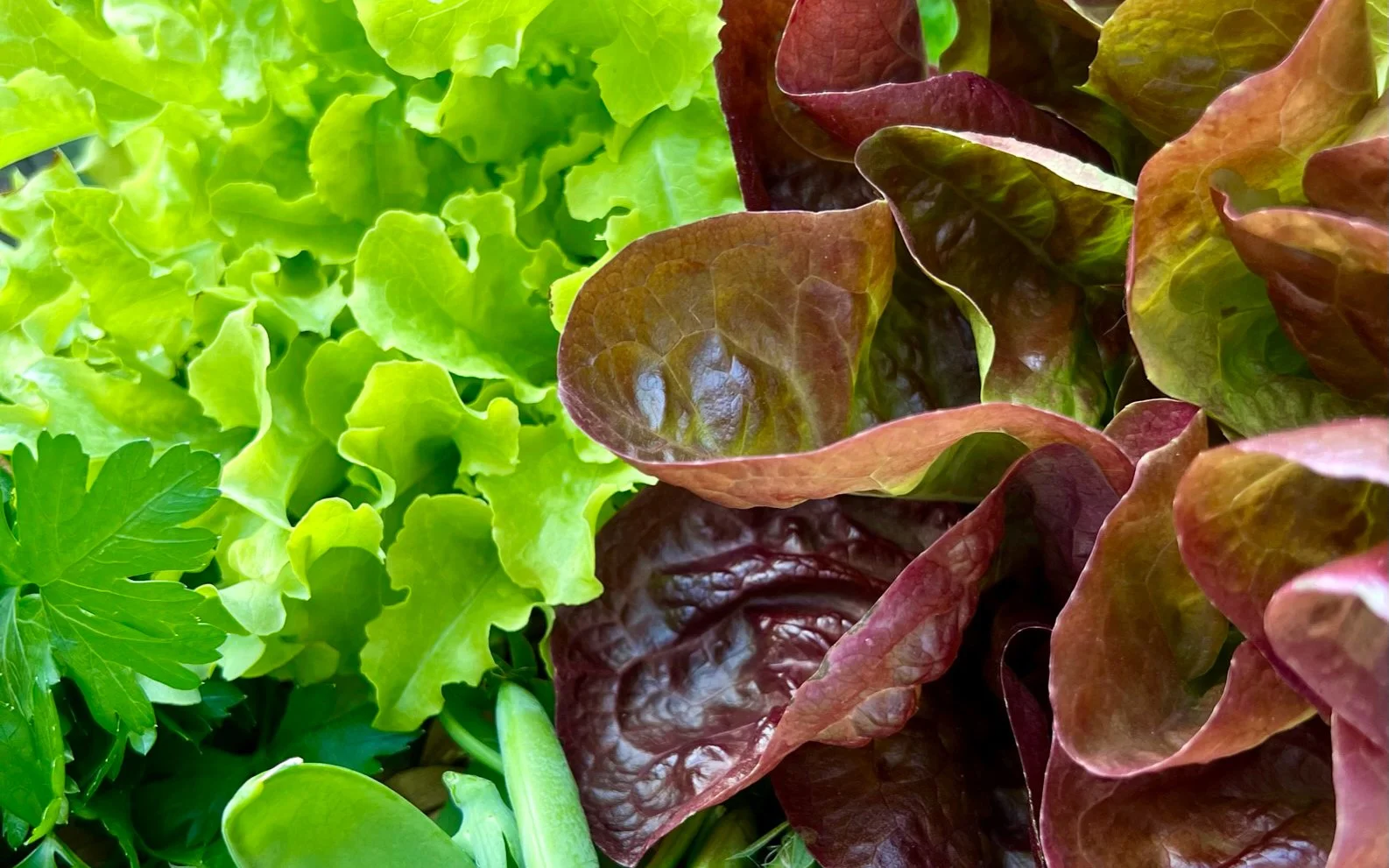
As veggie gardeners, we plan around frost dates and soil temperatures, but for cool-season crops, shrinking daylight is another consideration. Please don't let this be a deterrent! A little planning and you'll get the tastiest, most nutrient dense greens with far less effort than their summer counterparts.
AN OVERLOOKED VARIABLE
Lettuce you can harvest every few days in September may only be pickable about once a week by November, even in a heated high tunnel, because less light means less photosynthesis, regardless of temperature.
Most of our fall staples (lettuce, spinach, brassicas) are long-day plants that respond to a critical daylight threshold, which is why they behave so differently in fall than in spring. Bok choy, for instance, bolts fast under spring's lengthening days but holds off until a hard freeze in autumn's shortening ones, maybe even sizing up into much bigger heads. Fall is a really lovely time to grow, just as long as we're patient.
IN THE SEED TRAYS
The gardening legend Eliot Coleman coined the phrase "Persephone Days" to mark the point when daylight drops below 10 hours a day and growth essentially stops no matter how mild the temperature. A good rule of thumb is to get a fall crop to about 75% of its days to maturity before your local 10-hour-day date (find it on timeanddate.com), since little size gain happens after that.
On top of that, add a fall factor of 10 to 14 days to whatever's printed on the seed packet, since crops maturing into cooling, shortening days grow slower than the spring-measured number assumes.
In Greek mythology, Persephone was pulled into the underworld by Hades, and her mother Demeter, goddess of the harvest, grieved so deeply that the earth went cold and dormant until Persephone returned each spring. The name fits those short, dark days when daylight dips below 10 hours and plants seem to pause right along with her, until the light comes back and growth picks up again.
IN PRACTICE
A 45-day Bloomsdale spinach effectively needs 59 days from an August sowing to hit a Zone 6 frost date reliably. For frost-tender crops like beans, tack on another 14-day buffer so the plant finishes a full two weeks before frost.
ADJUSTING FOR YOUR GARDEN
Find your frost date and your 10-hour-day date, add the fall factor to every crop's maturity number, and count backward from whichever date is more limiting. Row covers and cold frames can buy you extra warmth and push back frost, but they can't add daylight hours, so the Persephone Days math still applies even under cover.
GET PLANTING
The big takeaway, if you're in the Northeast or other cool climates, let's get our fall gardens planted now so we can enjoy all fall long.
If you haven't planted a fall garden before, let this be your year, even if it's just a bed or two, or even a few containers to make a salad bowl. Spinach, arugula, lettuces are some of the easiest, quickest things to grow.
Now let’s use some of those late summer tomatoes…
SAVORY TOMATO COBBLER
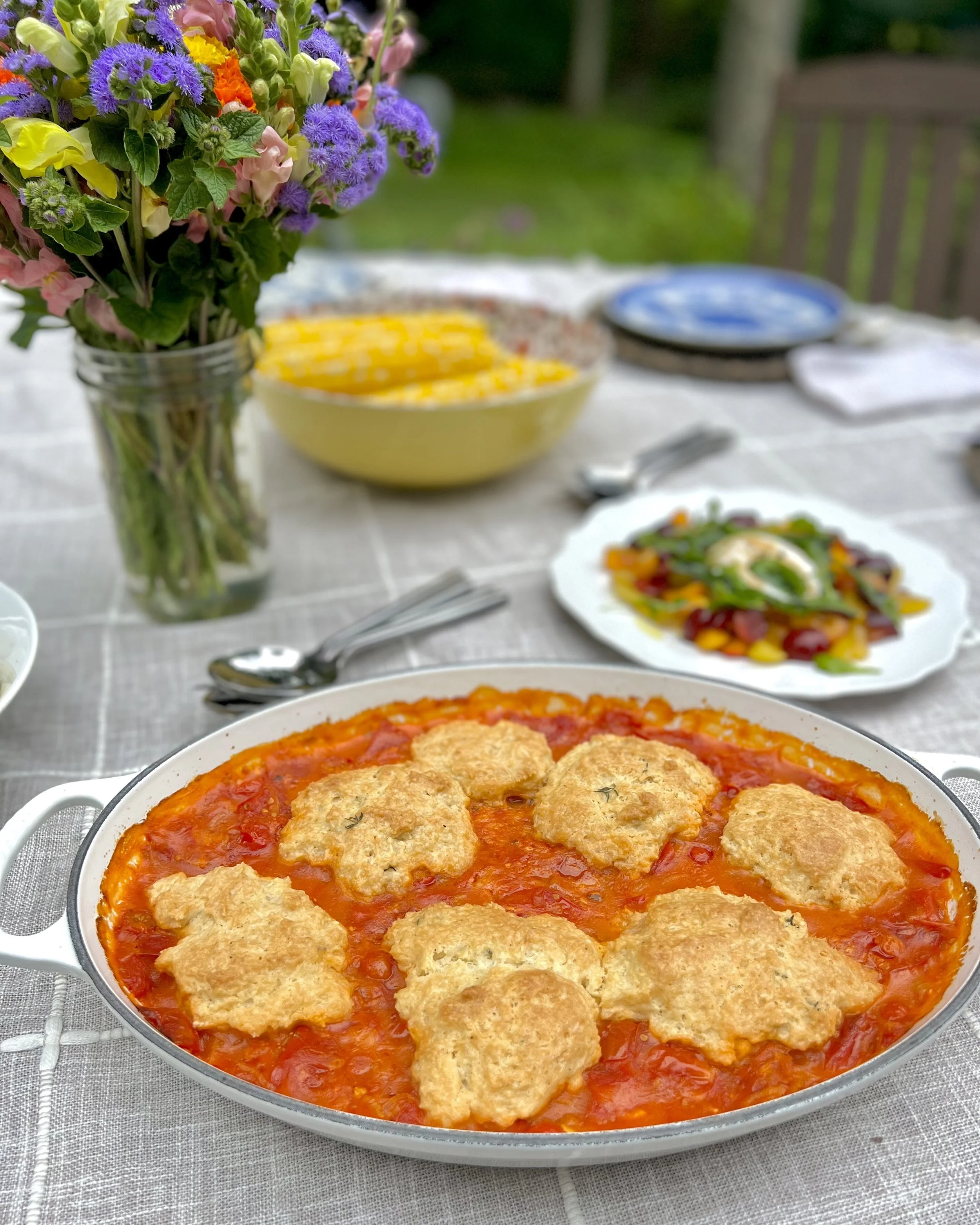
Every year we drive an entire harvest basket full of tomatoes from the garden down to NC with us on our annual trip to make a double batch of this cobbler for the first pot luck of the week. Sometimes I space the biscuits properly, other times, it looks like below.
INGREDIENTS
For the filling:
3 tablespoons unsalted butter
1 medium onion, diced
2 garlic cloves, minced
1 teaspoon fresh thyme, chopped
1/8 teaspoon cayenne pepper (optional)
1.2- lbs tomatoes cut into 1-inch pieces
1 teaspoon light brown sugar, packed
Kosher salt
2 cups cherry tomatoes, halved
3 tablespoons all-purpose flour
For the topping:
1 1/2 cups all-purpose flour
1 1/2 teaspoons baking powder
1 teaspoon granulated sugar
1 tablespoon kosher salt
pepper if desired
6 tablespoons cold unsalted butter, cubed
2/3 cup milk, plus more for brushing
INSTRUCTIONS
Preheat the oven to 350°F.
Filling: Melt 2 tablespoons of butter in a large skillet over medium-high heat. Add the onion and cook, stirring occasionally, until soft and lightly golden, about 5 minutes. Stir in the garlic, thyme, and cayenne, and cook 1 more minute. Add the chopped tomatoes, brown sugar, and 1 ½ teaspoons salt. Bring to a simmer and cook until the tomatoes just start to soften, 4-5 minutes. Give it a taste for seasoning. Take it off the heat, then stir in the cherry tomatoes and flour for filling. Pour into a 2-quart baking dish and dot with the remaining tablespoon of butter.
Topping: Whisk the flour, baking powder, sugar, 3/4 teaspoon salt, and a grind or two of pepper in a medium bowl. Add the cold butter and rub it into the flour with your fingers or a pastry cutter until it looks like coarse meal with small pea-sized bits of butter still visible. Add the milk and mix gently with a fork just until a sticky dough forms. Don't overwork it.
Drop spoonfuls of dough over the tomato filling and brush with a little milk. Set the dish on a baking sheet and bake until golden and bubbling, 50 minutes to 1 hour. Let it rest 15 minutes before serving.
From my garden to yours,
Kiera