WHAT TO PLANT FOR MONARCH BUTTERFLIES AND FALL POLLINATORS
Nectar for travelers and neighbors alike
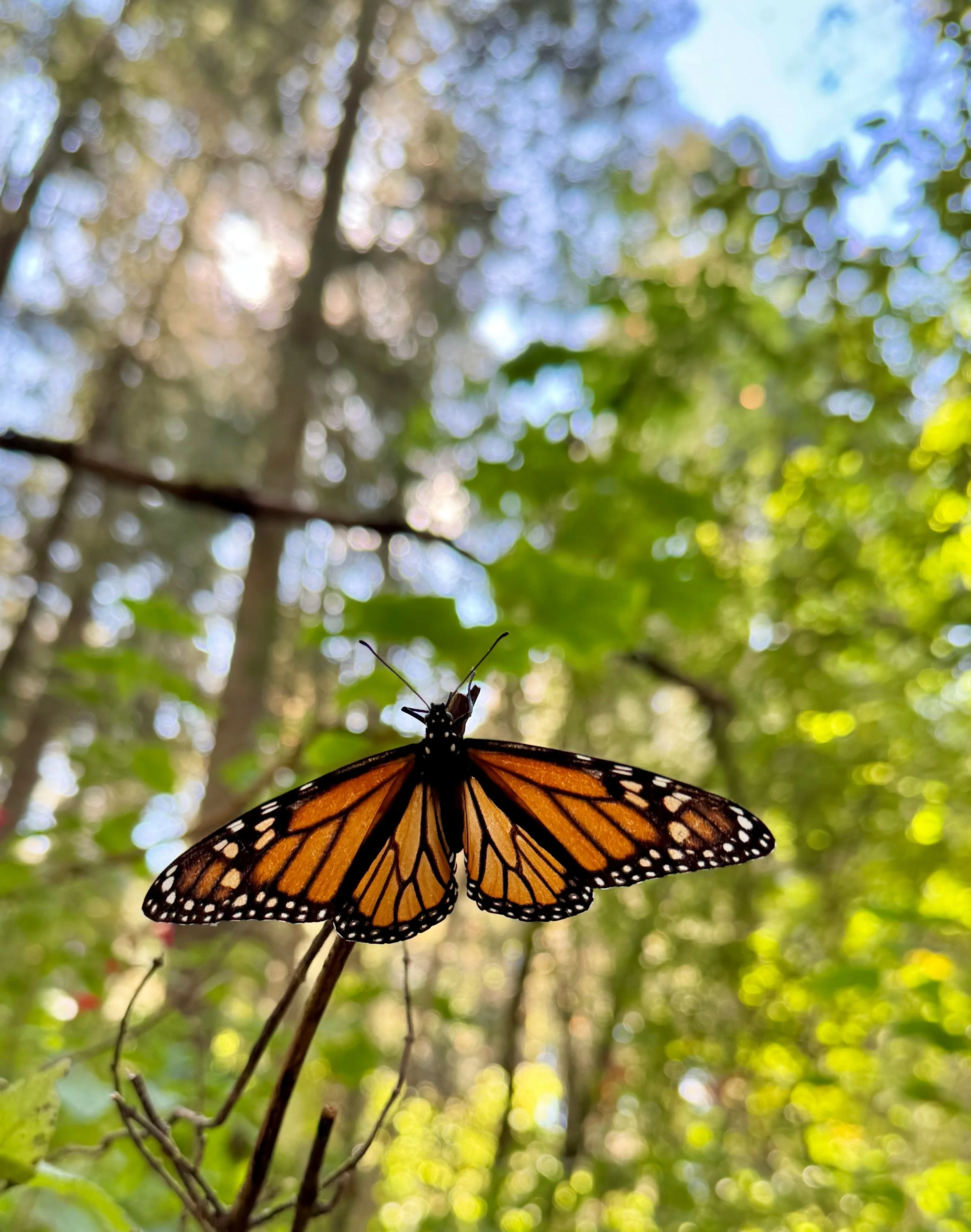
Quick answer: The best late-season blooms for monarch butterflies and other fall pollinators include native perennials plus some annuals that may already in your space. More details below. These plants provide the nectar monarchs and hummingbirds need to fuel their migration, and give local pollinators a last meal before winter.
We're turning our heads from the kitchen garden and toward supporting the greater ecosystem of our properties. For the last several years, I've gone to the Oyamel forest in Michoacán, Mexico to visit the Monarch butterflies in their winter home. I stumble over words trying to describe its magic. It's incredible that some of these creatures fly up to 3,000 miles, down the East Coast, across the Gulf of Mexico, and down to the mountains of central Mexico. One single generation of Monarchs makes that journey, while several make the return trip.
West of the Rockies, their genetically identical counterparts travel a much shorter distance, just around 300 miles, to overwinter along the California coast. Scientists haven't yet figured out why they don't cross the mountains and make the longer journey too.
In late August through mid-October, Monarchs will be leaving the Northeast and need fuel. Late-blooming nectar sources are critical to them and to other migratory garden visitors like hummingbirds, as well as pollinators who will be staying local but need a last food source before they settle in for winter. What can we plant to help?
WHICH ANNUAL FLOWERS KEEP BLOOMING FOR MONARCHS THROUGHOUT THE FALL?
More than just a pretty face: before we get into the perennials I plant in our 6A Hudson Valley gardens with this purpose in mind, some annuals that are possibly already in your garden will continue to provide nectar through the first frost, and some even beyond, if we just leave them be. Some of my favorites…
Through first frost: zinnia, cosmos, cleome
And beyond: sunflowers and calendula
Sadly the mums filling the shelves right now aren't helpful for this effort. The majority are bred for dense, showy double petals, which make it nearly impossible for pollinators to reach the nectar. The less common single-flowered mums, also called daisy-form mums, are a good option instead.
what are the best late-season perennials for monarchs and pollinators?
To see if these make sense for your area and growing conditions, or to get more inspiration, I highly recommend starting with the Lady Bird Johnson Wildflower Center website, HERE. Also check out the National Wildlife Federation's Native Plant Finder, which ranks plants by the number of butterfly and moth species that use them as host plants; you can find it HERE.
Organized by color because that brings me joy…
Red
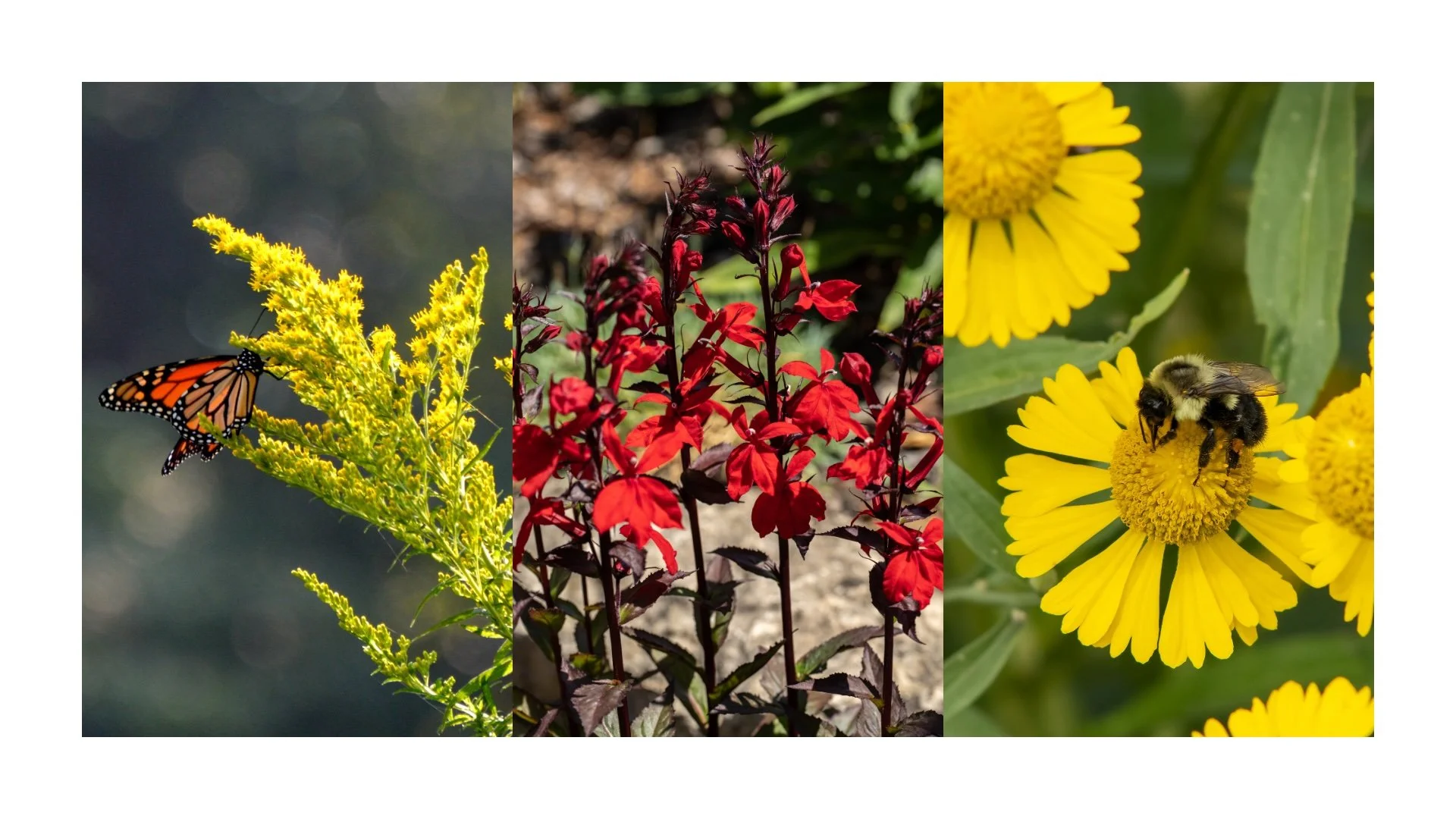
Cardinal Flower (Lobelia cardinalis) delivers unmatched late-summer color with tall spikes and is a hummingbird magnet.
Yellow/Orange
Goldenrod (Solidago spp.) Over two dozen native NY species. Most bloom late summer into fall, providing late season nectar and seeds for small mammals. Hosts over 126 species of butterflies and moths. For a smaller variety, consider Golden Fleece Goldenrod.
Sneezeweed (Helenium autumnale) Terribly and misleadingly named.
Pinks + Purples
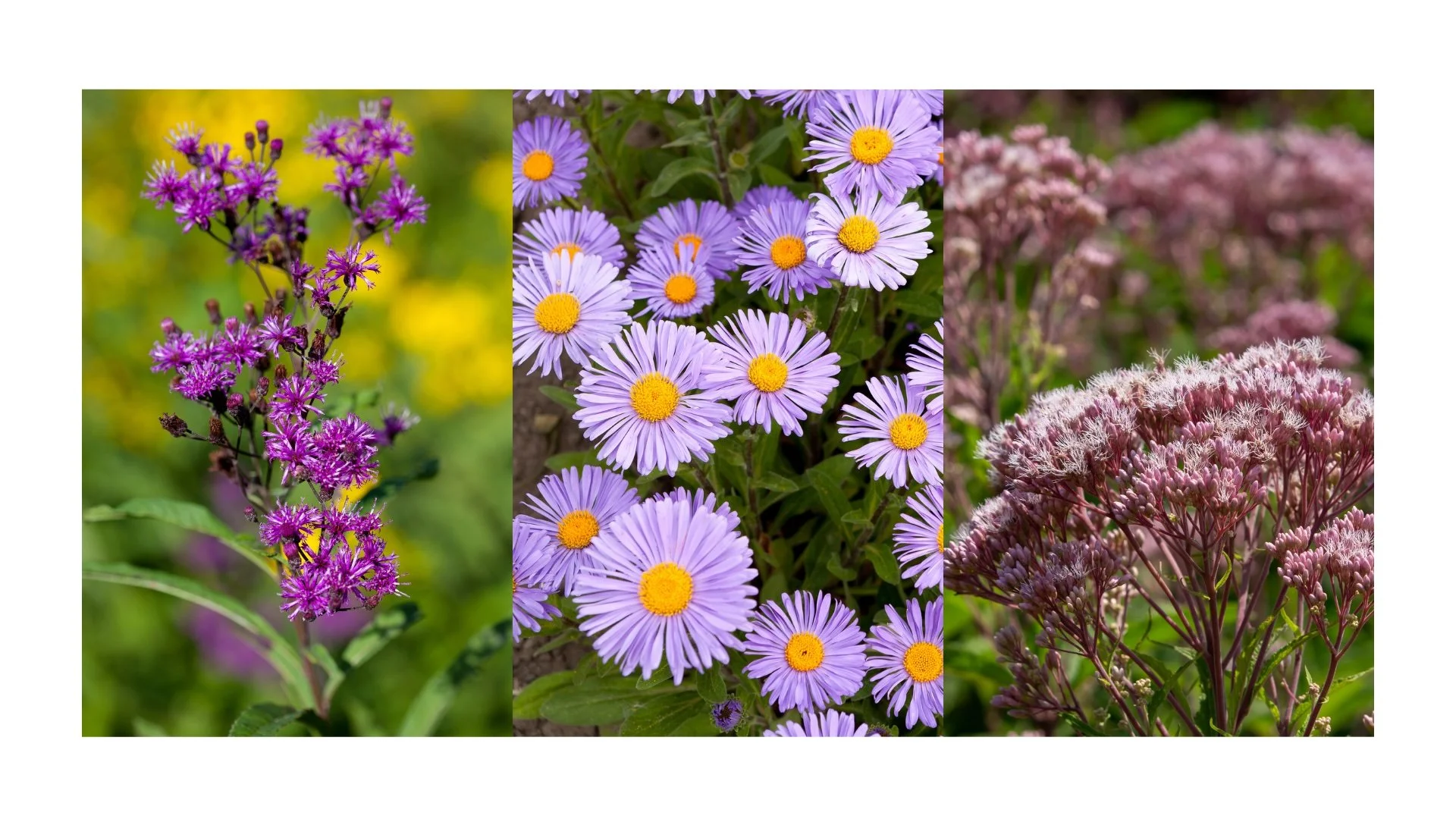
Joe-Pye Weed (Eutrochium purpureum) Tall, dusky-pink/mauve clusters
New England Aster (Symphyotrichum novae-angliae) Purple and pinkish daisy-like blooms
New York Ironweed (Vernonia noveboracensis) Deep purple flowers in fall; monarchs love it.
New York Aster (Symphyotrichum novi-belgii) Cool violet-blue blooms, documented multi-day nectaring during peak monarch fall migration, the exclusive pollen source for couple specialist bees AND host plant to at least two butterflies that I can think of!
White
White Snakeroot (Ageratina altissima) White flowers on purplish stems, (toxic to livestock if ingested, so keep away from grazing animals)
Asters: Calico has abundant tiny white flowers with color changing centers, White Wood for shady areas, White Heath with it’s small pine needle like petals, and Flat Topped White for gorgeous towering presence in dry, full sun spots.
Interestingly, garlic chives, with their white orbs, are a monarch favorite in my garden.