Growing Spinach for Fall and Winter Harvests
And how to freeze it
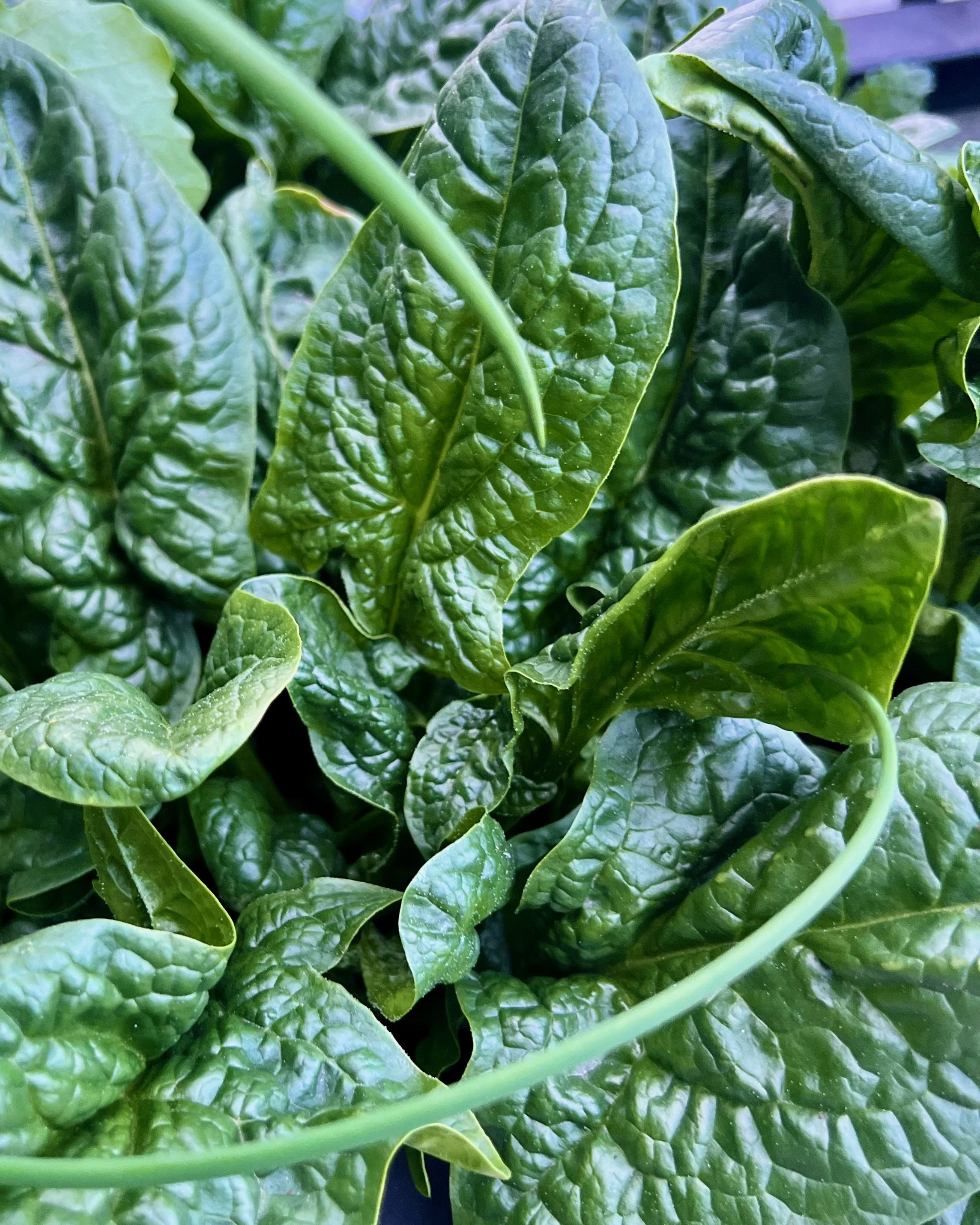
Never did I ever think I'd write an entire post about spinach, but here we are. Spinach infamously cooks down to nothing, so I plant a ton of it wherever we have space. It's quick to germinate, easy to grow, and if planted in my Hudson Valley garden in late summer or early fall, I'll harvest throughout fall into winter. If you've been limited to simply choosing between baby and mature spinach clamshells, I'm excited to introduce you to the fantastic nuances of…spinach.
The All-Star Lineup: Best Spinach Varieties for Fall Planting
In both my gardens and those of my clients, we've tried a lot of different types. These are the fan favorites.
For Speed: Space
Space is ready for harvest in 37 to 54 days, depending on whether you're picking baby leaf or letting it go full size, and gets bonus points for bolt resistance, meaning it holds up well if we get an unexpected stretch of warm weather.
For Earliest Plantings: Renegade
Renegade, a smooth-leaf spinach, germinates reliably in warmer soils, so I start planting in open spots as early as mid-August.
For Flavor: Bloomsdale
The Bloomsdale lineup. An heirloom savoy type with a deep, almost nutty flavor that holds up in cooked dishes. It's less heat tolerant at germination, so give it a slightly later slot once temperatures ease.
Texturally Speaking: Savoy, Semi-Savoy, and Flat Leaf Spinach
When looking at seed packets, you'll see the following leaf texture descriptions.
Savoy types have thick, crinkled leaves that hold up to cold and give you a heartier bite once cooked, but they take longer to establish in warm fall soil and need a thorough wash.
Semi-savoy types split the difference: enough heat tolerance to germinate reliably, enough cold tolerance to keep producing as the season winds down, and easier to clean than true savoy.
Flat leaf types are the cleanest and most uniform, which is why they show up so often in salad mixes.
Preserving: How to Freeze Spinach
Whole leaf (blanched) is the best choice if you want spinach that still resembles spinach, something you can sauté, add to a quiche, or toss into a pasta later. Blanch for 1 to 2 minutes in boiling water, shock in ice water to stop the cooking, squeeze out the excess liquid, then pack into bags with the air pressed out. Blanching does cost you some water-soluble nutrients like vitamin C, but it deactivates the enzymes that would otherwise keep breaking the leaves down in the freezer. Store up to 8 months. (I use the leftover blanching water to make pasta or rice.)
Pureed is great for ease of use in sauces or smoothies where texture doesn't really matter. I add a splash of water into the blender before pureeing. Freeze in ice cube trays, then transfer the cubes into a bag or freezer-friendly container once solid. Store up to 3 months.
Not recommended: whole leaf (raw, unblanched). It works too and skips the nutrient loss from blanching, but the tradeoff is texture and shelf life. Raw frozen spinach turns mushy and dark once thawed. It also doesn't keep as long in the freezer, generally best used within a month or two before quality drops.
I think that's all I have to say on spinach for the moment.
From my garden to yours,
Kiera