Harvest Often, Harvest Right
Simple habits that keep your garden productive all season
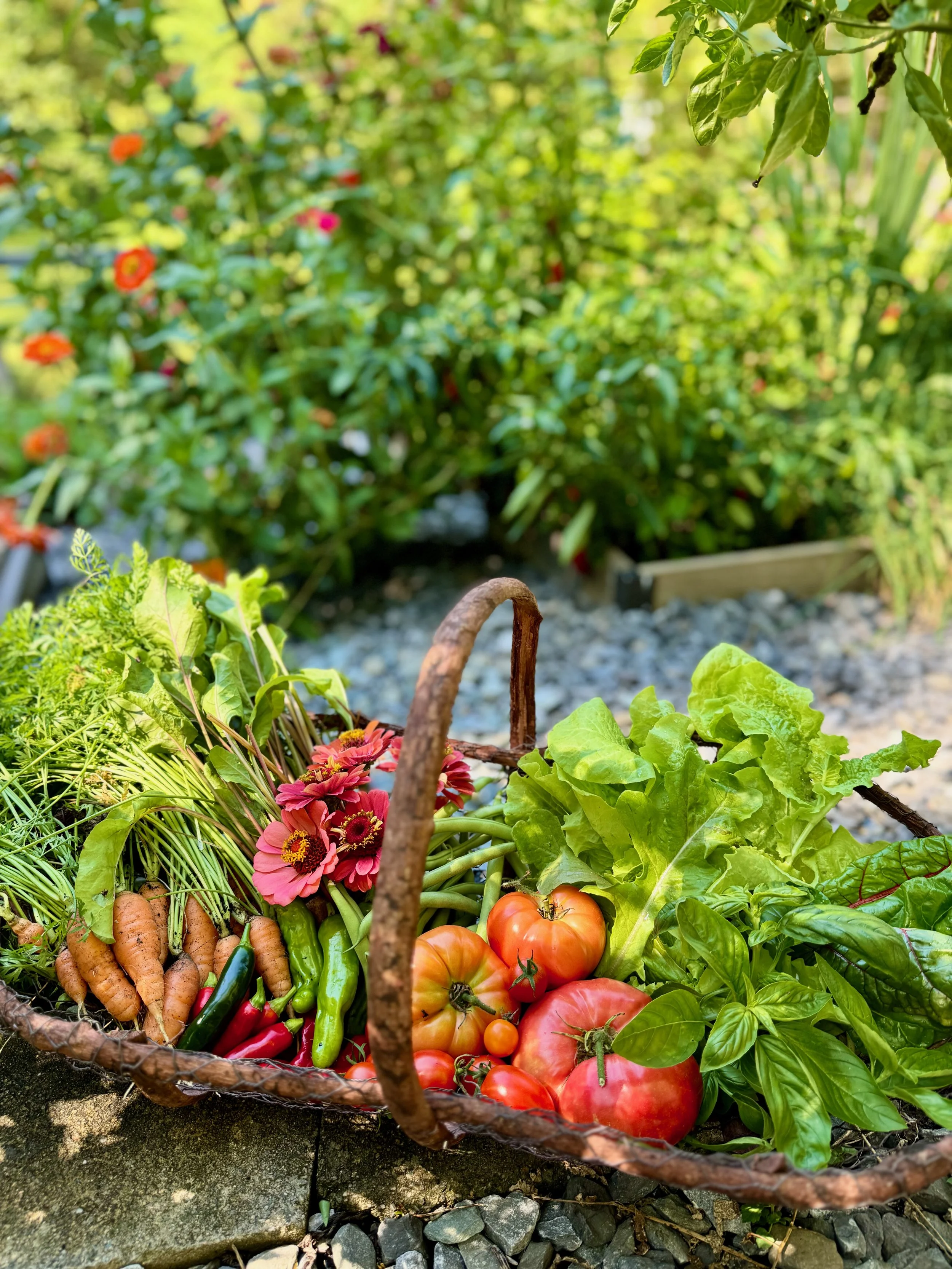
Simply put, harvest what you grow, and do it often. Regular harvesting encourages many vegetable and herb plants to keep producing, directing their energy toward new growth rather than seed production. It also improves airflow and light penetration through the plant for healthier growth. Of course, harvesting means more to enjoy in the kitchen, but it also creates a more resilient garden that's better equipped to handle whatever weather is thrown our way.
HARVEST FROM THE OUTSIDE IN
For many leafy greens and herbs, begin with the oldest growth and work your way inward. Removing mature outer or lower leaves and stems allows the center of the plant to keep developing. As a general rule, avoid harvesting more than one-third of the plant at a time so it has enough foliage to continue growing.
This works well for:
Lettuce & salad greens
Kale & collards
Swiss chard
Parsley (cut steps at the base and not just the leaves)
TRIM HERBS TO ENCOURAGE NEW GROWTH
Thyme: Snip stems just above a set of leaves, harvesting the tender green growth. Avoid cutting deep into the woody base. Regular trimming helps keep plants compact and productive.
Sage: Harvest individual leaves or cut young stems just above a leaf pair. Avoid removing too much at once, especially from older plants.
Oregano: Cut stems back regularly, just above a leaf node, to encourage bushier growth and fresh new leaves.
Chives: Cut leaves close to the soil line rather than trimming just the tips.
Basil: Cut the top growth just above a leaf pair to encourage branching and create a fuller plant.
harvesting fruiting crops
Fruiting crops are usually best harvested soon after they reach their mature size, while they are still tender and actively producing.
Cucumbers, zucchini, and beans are best picked frequently, before they become oversized or develop large seeds.
Eggplants should be harvested when the skin is still glossy and the fruit feels firm. Peppers can be picked once they reach full size, with many varieties becoming sweeter as they ripen in color.
Tomatoes are a different beast and we’ll need to dedicate an entire post to when to harvest the glorious, quintessential beauty of our summer gardens.
From my garden to yours,
Kiera