Strawberry Fields Forever
A FIELD GUIDE TO BEST TYPES FOR THE HOME GARDEN
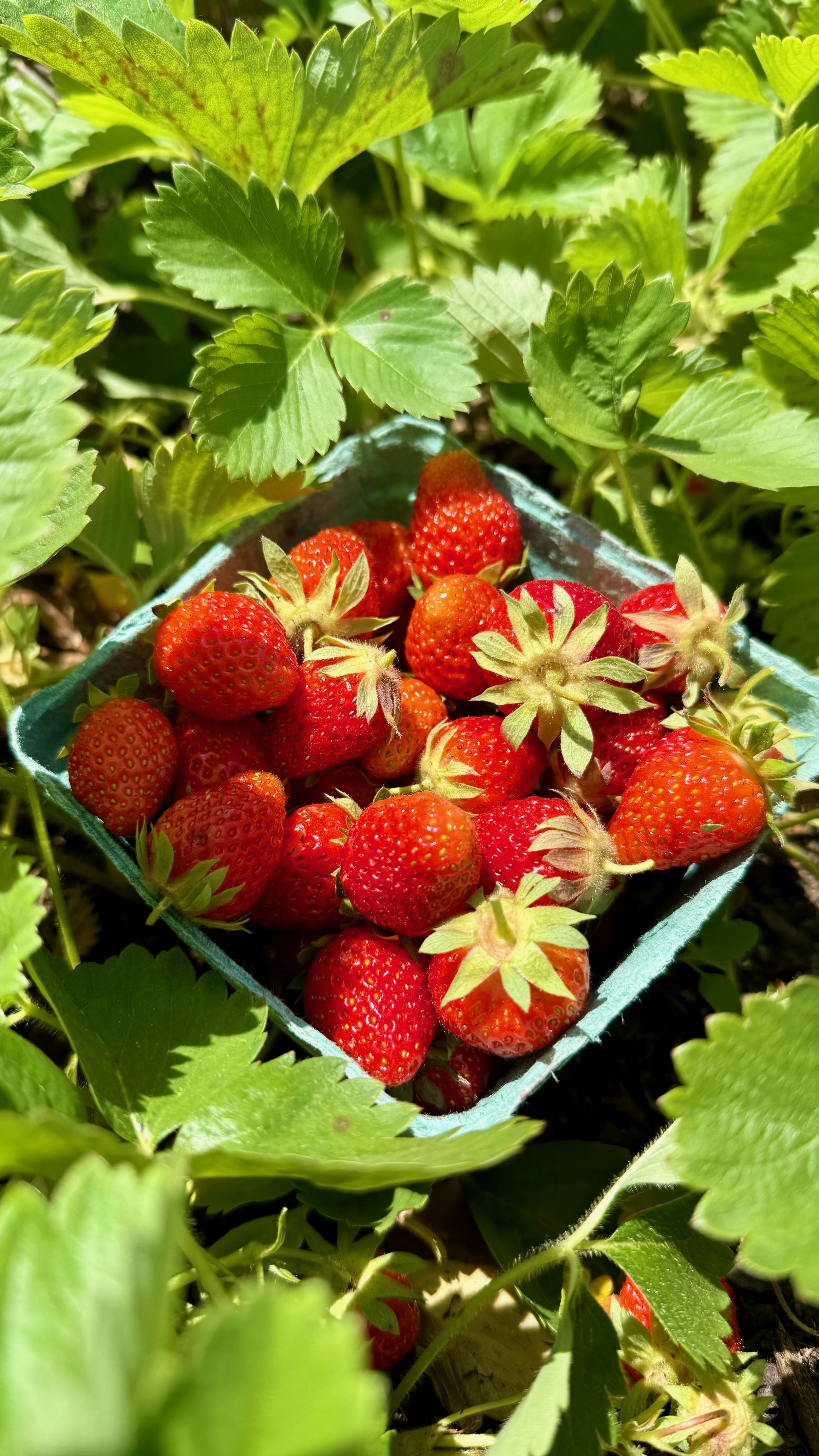
Summer is here, and our roadside farm stands in the Hudson Valley are filled with gorgeous, bright red, quintessential strawberries. Those, my friends, are just one type that we can grow. They are not, however, the strawberries that I most often put in our client gardens.
The terminology gets thrown around loosely at nurseries, so let's sort out our options. Even if you aren't planning to expand your berry patch, stick around for the recipe at the end- a salty-sweet shortcake that you may remember from a former Manhattan hot spot.
June-Bearing
June-bearing strawberries do exactly what the name suggests: they produce a single, concentrated harvest, usually over a two-to-three-week window in late spring or early summer. Because the plant isn't splitting its energy across multiple fruiting cycles, you tend to get larger, sweeter berries than you would from a variety that fruits all season. They also send out plenty of runners, so if you're hoping to expand your patch for free, June-bearers will do that for you.
Best for a big haul for jam, freezer stash, or a proper preserving weekend. I find them the hardest to have thrive year after year. They tend to be more particular about renovation and disease pressure than the other types, so don't be surprised if a June-bearing patch needs more attention to stay productive past year two or three.
Flavor standouts: Earliglow (early season), Jewel (mid-season), Sparkle (late season, an old New England heirloom).
Everbearing
It sounds like it should mean fruit all summer, but true everbearing varieties actually produce in two flushes: the first in early summer, and a second in late summer or fall, with a noticeable lull in between.
They were largely bred for cold-hardiness rather than continuous production. Unless you're in a notably cold climate, day-neutral varieties have largely taken their place. They were developed later and, for most home gardeners, simply outperform the older everbearing types on both yield and length of season.
A note worth filing away: a lot of nursery catalogs use "everbearing" as a catch-all and lump day-neutral varieties under that label too. So if a tag at the garden center says "everbearing," it's worth a quick search before you buy, just to know what fruiting pattern you're actually signing up for.
Day-Neutral
As long as temperatures stay in a moderate range, day-neutral plants keep flowering and fruiting in a steady trickle from early summer through fall. Individual harvests are small, but the season is much longer. Plus, they send out far fewer runners, which makes them well suited to containers and raised beds, a real plus if you're working with limited space or don't want a strawberry patch slowly taking over the rest of the garden.
Flavor standouts: Mara des Bois (often cited as the best-tasting strawberry, period), Albion (large, productive), Seascape and Tristar (dependable, decent flavor, heat-tolerant).
Alpine (My Heart)
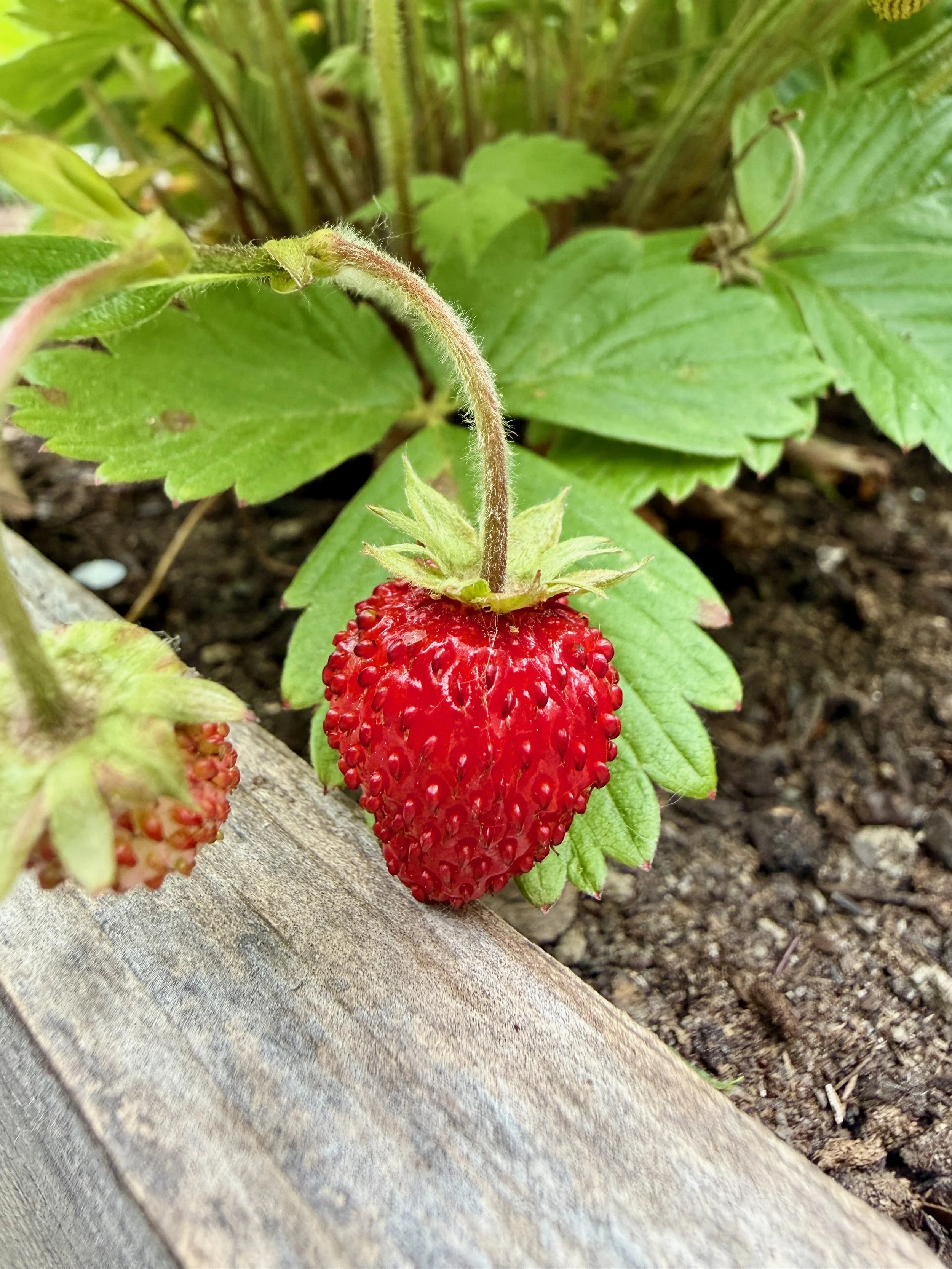
Alpine strawberries (Fragaria vesca) aren't really part of this whole classification system. They're a completely different species from the garden strawberries (Fragaria × ananassa) that make up every category above, and they produce all season long.
Alpines clump instead of sending runners, which makes them a tidy edging plant rather than a spreader. The berries are tiny, often thimble-sized, and intensely aromatic. Yield per plant is low, so I tend to plant them along the entire edge of a bed to reach critical mass. One or two plants will give you a snack here and there, but a full border will actually give you something to harvest.
These are my favorite strawberries. The yield will never wow you, but the flavor is spectacular. Perfect with garden lettuce.
Flavor standouts: Mignonette (classic, compact, very aromatic), Yellow Wonder (pale yellow berries, said to be less appealing to birds since they don't look ripe), Alexandria (larger alpine berries, more productive), Rügen Improved (old European heirloom, excellent flavor).
So Many Options, So Little Need to Overthink It
I swear I don't try to complicate everything. There are so many options available, and we try to choose the kitchen garden plants that allow us to enjoy them exactly how we want. Whether that's a big June haul for the freezer, a slow trickle of day-neutrals through the fall, or a border of alpines you graze on while watering the tomatoes, there's a strawberry suited to how you actually want to use it.
Before I sign off, I want to share a delicious salty-sweet recipe from Momofuku Ssäm Bar, circa 2006. Anyone else remember it? The Milk Bar revival isn't quite the same.
Momofuku's Strawberry Shortcake
Salty and sweet. Makes 8.
Ingredients
8 tablespoons (1 stick) unsalted butter
1 cup flour
¼ cup sugar
3 tablespoons packed light brown sugar
1 teaspoon baking powder
¾ teaspoon salt
1 egg
1 tablespoon milk
1 cup powdered sugar
2 cups strawberries (June-bearing, preferably)
2 tablespoons sugar
Steps
Preheat the oven to 350°F and grease a baking sheet.
For the shortcakes, pinch the butter into the dry ingredients with your fingers until no chunks remain, about a minute. Crack in the egg and add the milk, then stir with a fork just until combined, about 30 seconds.
Let the dough rest a few minutes, then scoop into 8 tablespoon-sized balls. Roll each ball through powdered sugar to coat, and space them two inches apart on the baking sheet.
Bake 13 minutes, until the edges turn golden.
While the cakes bake, slice the strawberries and toss gently with sugar. They'll release their juices and turn syrupy as they sit.
Serve warm or at room temperature, spooned generously with strawberries and their juice, plus whipped cream, ice cream, yogurt, really anything creamy.