topping peppers and basil
Off with their heads
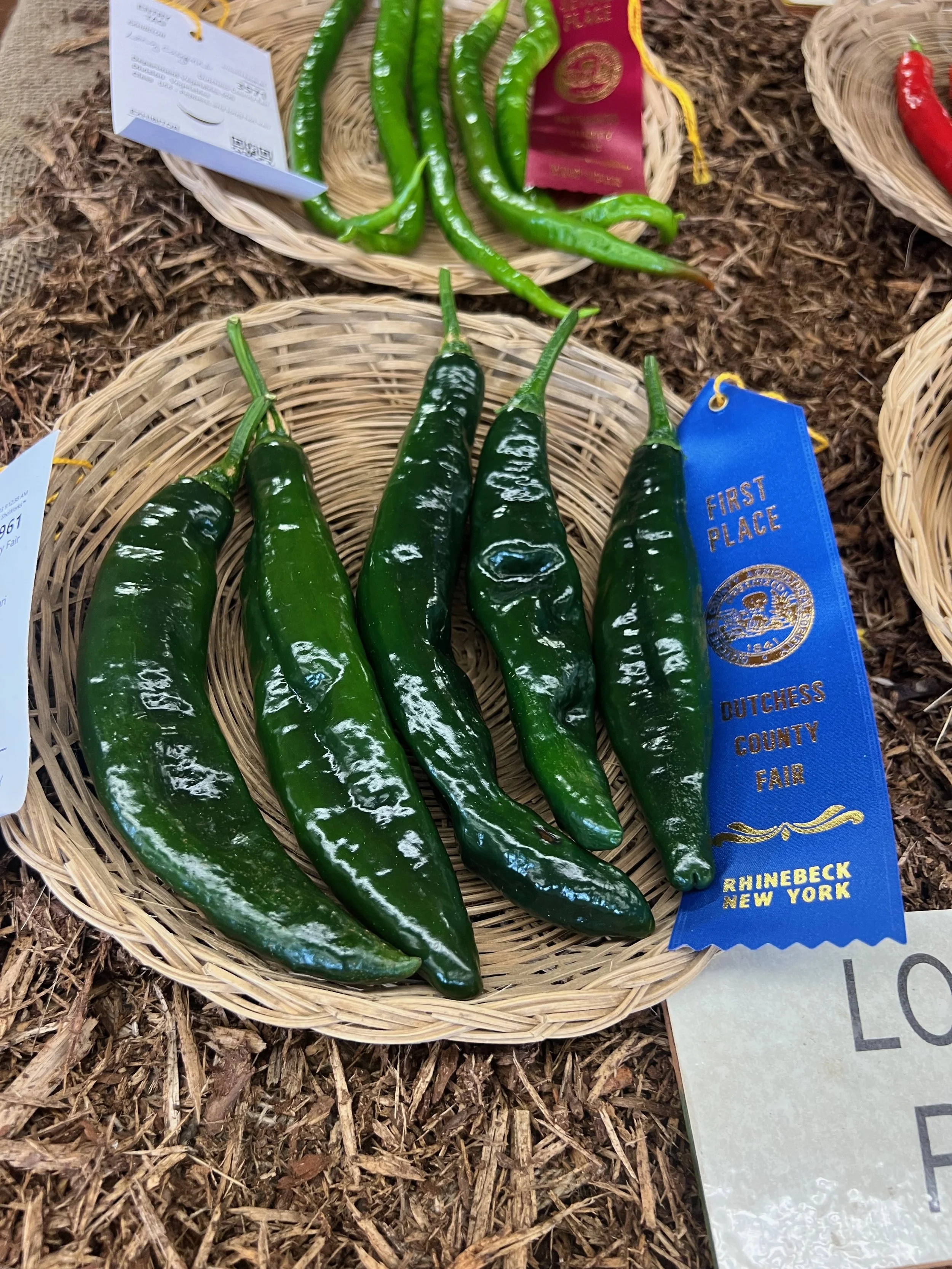
Trust me. We don’t mess around when it comes to chiles.
Channel your inner Queen of Hearts. At different points in the growing season, we must take out our snippers and make some cuts. In these early days of growing our summer veg, this focus is mostly on topping and pinching. We can remove the main growing tip and therefore the plant's primary source of auxin, the hormone driving upward growth. Without it, the plant pushes energy sideways, producing more side shoots, more to harvest. Multiple stems also handle wind and the weight of a heavy crop far better than a single tall spike.
Right now in the Hudson Valley and other cool climates, not much needs pruning. I've highlighted some exceptions below.
The other piece here is the removal of flowers on our fruiting plants, like eggplants and zucchini, and as mentioned below, peppers and tomatoes. Setting fruit takes an enormous amount of energy, and a plant that has been sitting rootbound in a nursery pot is often already trying to do it under stress. For the first three weeks after transplanting, I remove any flowers that appear. It feels counterintuitive but the goal is a strong, well-rooted plant, and that pays off in a bigger harvest later. Some growers skip this step and do fine, but I've never regretted it.
A QUICK GUIDE for making the cuts...
PEPPERS
I prefer to top my chile plants, and smaller fruit sweet peppers like the lunchbox variety.
That said, topping isn't right for every situation:
Thai and other small compact bushing varieties don't need it and won't benefit.
Cold climates: the delay in fruiting can cost you the harvest entirely. I'd skip it.
Cool climates: for the same reason as above, I don't top bell pepper plants.
Limited horizontal space: a taller single-stem plant produces less but may suit your garden better.
Wait until the plant has three to five sets of true leaves. Take a clean sharp pair of garden scissors or herb snippers and clip the main growing shoot just above the bottom two or three pairs of leaves. Within the week, side shoots will start pushing out where there was just one stem. If they get leggy later in the season, you can top those too.
BASIL
Basil transplanted in late May will often sit and sulk for two to three weeks if nights are still cool, putting on little visible growth. Wait until the plant looks vigorous, has at least three to four pairs of leaves, and is actively growing before you make the first pinch.
When it's ready, pinch or cut the central stem back to just above a pair of healthy leaves, leaving two to three pairs. The plant will fork and produce two new growing tips where there was one. Harvest frequently, and the moment you see a flower spike forming, remove it, unless you're leaving them for the bees or using as cut flowers.
TOMATOES
Lower branch removal
As your tomato plant grows, keep an eye on the lowest branches and leaves. Any foliage touching or drooping close to the soil is a problem. Wet soil splashes onto leaves during watering and rain, and that splash is one of the primary ways soilborne diseases like early blight and septoria leaf spot travel up into the plant. Not good.
Remove the lowest branches cleanly with secateurs/pruning shears, working your way up until all remaining foliage sits at least 8–12 inches above the soil. If there are a lot of branches, stage the removal over a couple of weeks to avoid stressing the plant.
CHIVES
If you're lucky to have an established clump, expect flowering in late May to June and cut the whole plant back by two-thirds once it finishes. It will regrow fully within three to four weeks, although you don't have to wait to harvest again. You can also wait to see if the plant looks tired or floppy at any point during the summer. They're very resilient.
If you transplanted chives in late May as a fresh young plant, it may not flower at all in its first summer. I don't typically do a proper cut back until the second year in the garden.