different types of garlic to plant in your home garden
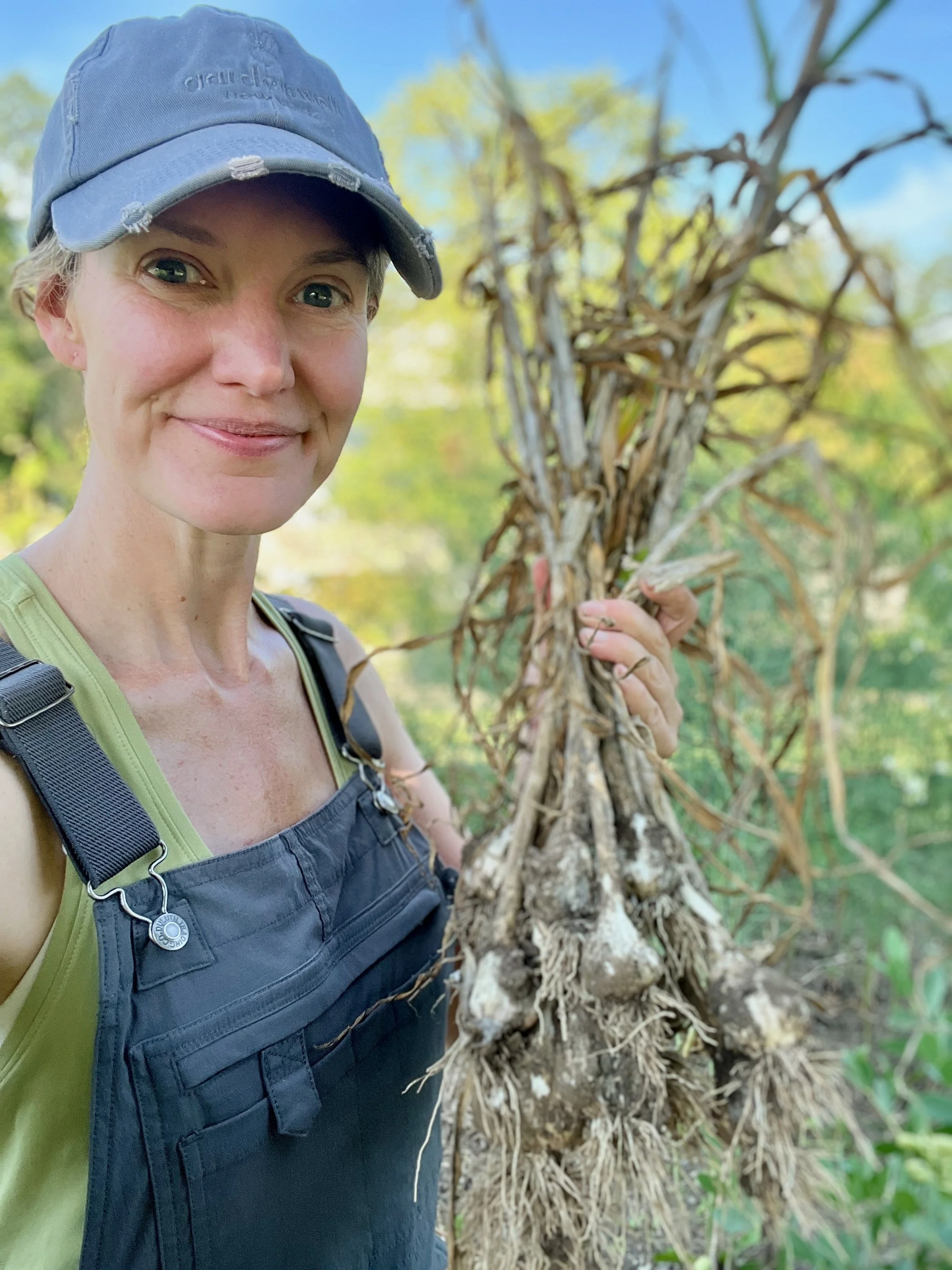
Garlic and shallots are the last thing to go into my vegetable gardens each year. So I thought I'd use this week to share my thoughts on homegrown garlic.
neck and neck
There are two main types of garlic. If you've only ever bought garlic at the grocery store, you've almost certainly been eating softneck. Softnecks store for a long time, which is why they dominate store shelves. Hardneck varieties don't keep as long, but they have perks of their own, including garlic scapes (hooray!) and a bolder, more complex flavor.
Only hardnecks send up scapes, the curly flower stalks you can cut and cook in early summer. It's a bonus harvest before the bulbs are ready, although the step also results in larger garlic heads come July.
Hardnecks need a proper winter. Softnecks tolerate milder ones. In climates with enough chilly days, you can grow either.
Softnecks have flexible stems that braid well. Hardneck stalks are, as the name implies, stiff.
sourcing seed garlic
I'd skip planting grocery store garlic. It may not be cold hardy, and it's sometimes treated to stop sprouting. We buy seed garlic from a few local nurseries and online. I really like Hudson Valley Seed Co, Keene Organics, and Pinetree Gardens, who just emailed yesterday about a 40% garlic sale. (Not a sales pitch- just sharing the news!)
let’s get better acquainted
"Hardneck" is a big family. Growers sort hardnecks into groups, and each one has its own personality.
Porcelain
Big, round, white bulbs with a classic garlic taste. They have a small number of large cloves that peel easily, and they do well in northern climates. Porcelains also tend to be some of the better keepers among hardnecks. Examples: Music, German White, Krasnodar White.
Rocambole
Often considered the richest and most complex of the bunch. The cloves have loose, tan-to-reddish skins that slip off easily. The tradeoff is storage: Rocamboles have a shorter shelf life than Porcelains, so use them first. Examples: Spanish Roja, German Red, Russian Red.
Purple Stripe
Beautiful striped bulbs with elongated, crescent-shaped cloves and a sweet flavor when roasted. Purple Stripes are also considered the ancestors of the other domesticated garlic types. Examples: Chesnok Red, Shatili. (There are also subcategories of purple stripe, marbled and glazed, but I haven’t grown either)
Bonus: Creole, Asiatic, and Turban types are a few more garlic families. They're a better fit for milder climates, so you'll see them less often around here.
A quick caveat. Flavor, clove size, and storage are partly genetic and partly shaped by your soil and weather, so your own garlic may differ from the descriptions.
my picks for client gardens
I plant some combination of these two hardnecks:
Music (Porcelain): A great all-around garlic, and my top choice for garlic powder. It's named after Al Music, who brought it to Canada from Italy in the 1980s.
Chesnok Red (Purple Stripe): My favorite for roasting and in any low and slow recipe.
getting the bulbs in the ground
In the Rhinebeck area, I plant garlic around Halloween. The goal is for the cloves to establish roots without sprouting. Roots get a head start in the cooling soil, and the green tops stay put until spring. Plant too early and you risk shoots that the winter can damage. I mulch with straw and then place some sort of welded wire (chicken wire, hardware cloth, etc) over top to stop my squirrels from digging.
From my garden to yours,
Kiera