Seeds or Seedlings?
Spring Vegetable Garden Edition
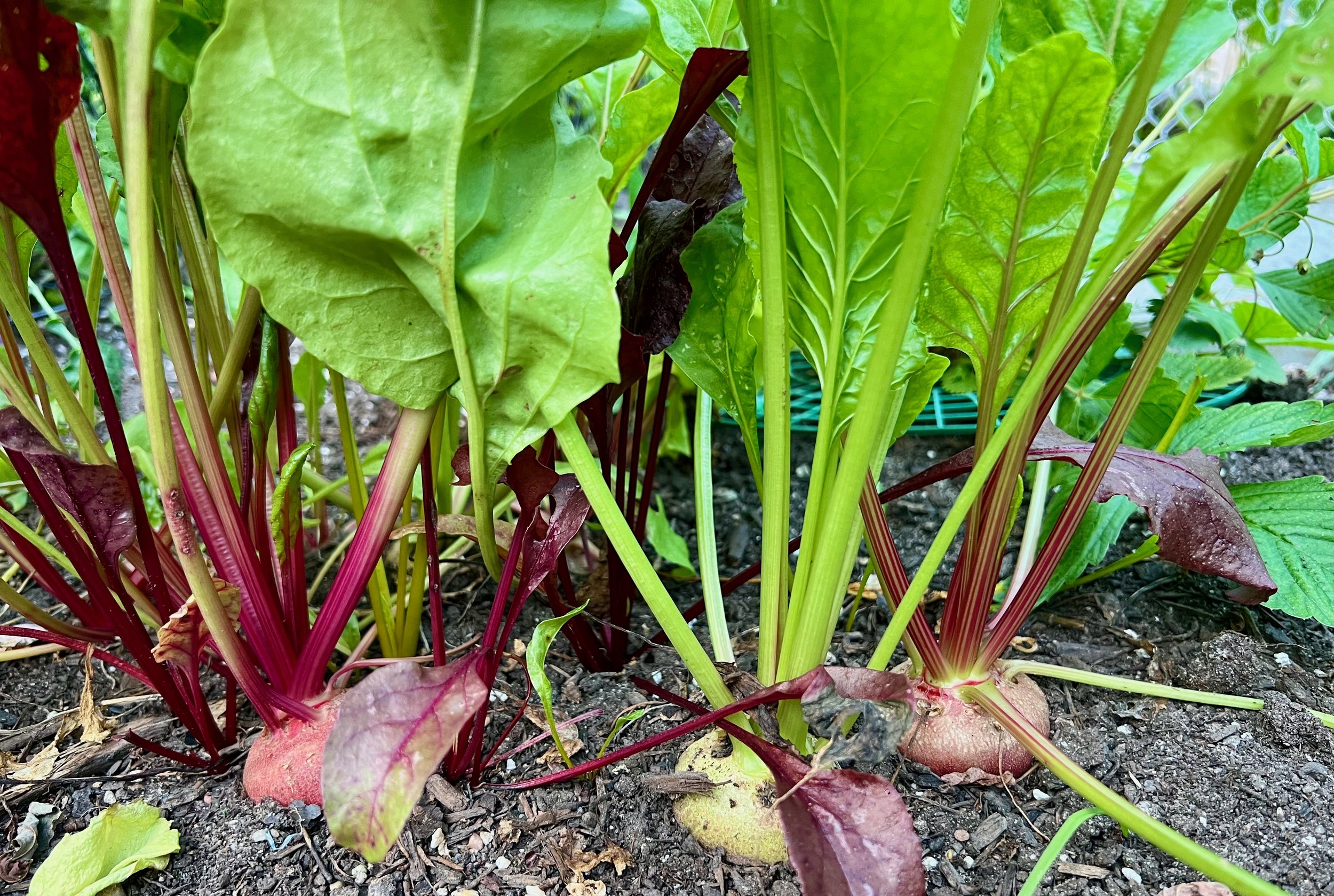
You’ve done the hard work discerning what you want to grow in your spring kitchen garden: lettuce, cilantro, beets, and maybe a few beautiful Easter Egg radishes. In cooler climates like the Hudson Valley and our neighbors in the Northeast, some plants need to go into the soil as seedlings or you’ll run out of time before the weather changes. Others act like complete drama queens when transplanted. And then we have the flexible ones, who are happy just to be grown.
So how do you decide if something should be direct sown (seeded) in the garden or transplanted as a seedling, either from the nursery or started indoors?
Guiding questions
1. How long does this crop need to mature?
Most cool season veggie seeds germinate once the soil and air reach around 45–50°F. How long do you have from that point until harvest? When searching online, be sure to include the variety as they can be quite different. If the weather at maturity usually soars above 75°F before that harvest timeframe, give yourself a head start by using seedlings. Generally, this shaves about 2–3 weeks off the time to maturity, plant dependent.
2. Does it tolerate root disturbance?
My nursery sells these adorable pre-planted carrot buckets. Those are great if you leave them in the container. But please resist all temptation to purchase root vegetable starts. Members of the bean and pea family often prefer to be directly sown, though I’ve had good luck if I’m very careful or if I start them myself using my Swift Blocker. Soil blocking reduces root disturbance significantly. Other spring veggies aren’t as particular.
3. What’s my budget?
A pack of organic seeds typically costs $1.50–$4.00 for 25–250 seeds. Seedlings near me start around $5 for four leafy green plants and go up to $5 per plant for herbs and larger starts.
4. What’s my tolerance and schedule?
If you plant 50 lettuce seeds, how important is it to you that you end up with 50 plants? Are you able to keep soil consistently moist with hand watering for the first couple of weeks? When do your local nurseries stock cool season vegetables? This may require a quick call, and the answer may be vague. If you seed start indoors, are you traveling, and if so, do you have a reliable plant nanny?
Food for thought
Planting by seed
Pros
Almost endless varietal options from around the world. Choose different flavors, colors, timing, and heritage.
Roots develop without interruption or confinement.
Cost effective, especially for succession planting and volume crops.
Plants respond immediately to local soil temperature, moisture, and microbial life.
No pause for recovery or acclimation, either from hardening off or transplant shock.
The trade-offs
Germination depends entirely on outdoor conditions.
Early losses are possible due to cold snaps, heavy rain, and wildlife. (And pups who like to dig in “empty” garden beds.)
Soil remains exposed until seedlings establish.
Watering must be very consistent and benefits from overhead watering.
Transplants
Pros
Buy time in short growing seasons.
No risk of giving space to a dud seed.
Irrigation ready.
The trade-offs
Limited varietal selection.
Potential transplant shock or root binding, though soil blocking avoids much of this.
Disconnection from the plant’s earliest growth phase.
Added expense, either from the nursery or from a seed-starting setup.
A blended strategy
We plant our gardens using a mix of seedlings and seeds. I’m happy to pay someone else to grow finicky or slow starts and long-season anchors, in addition to when it fits the schedule and life of the client. We tend to use mostly transplants in new garden installations because it’s just so hard to wait for that first ever harvest! To stagger harvest times, we often plant both lettuce seedlings and seeds at the same time.
Note: To avoid displacing seeds, always plant your transplants first. It seems obvious, but I’ve made that mistake.
Quick Reference
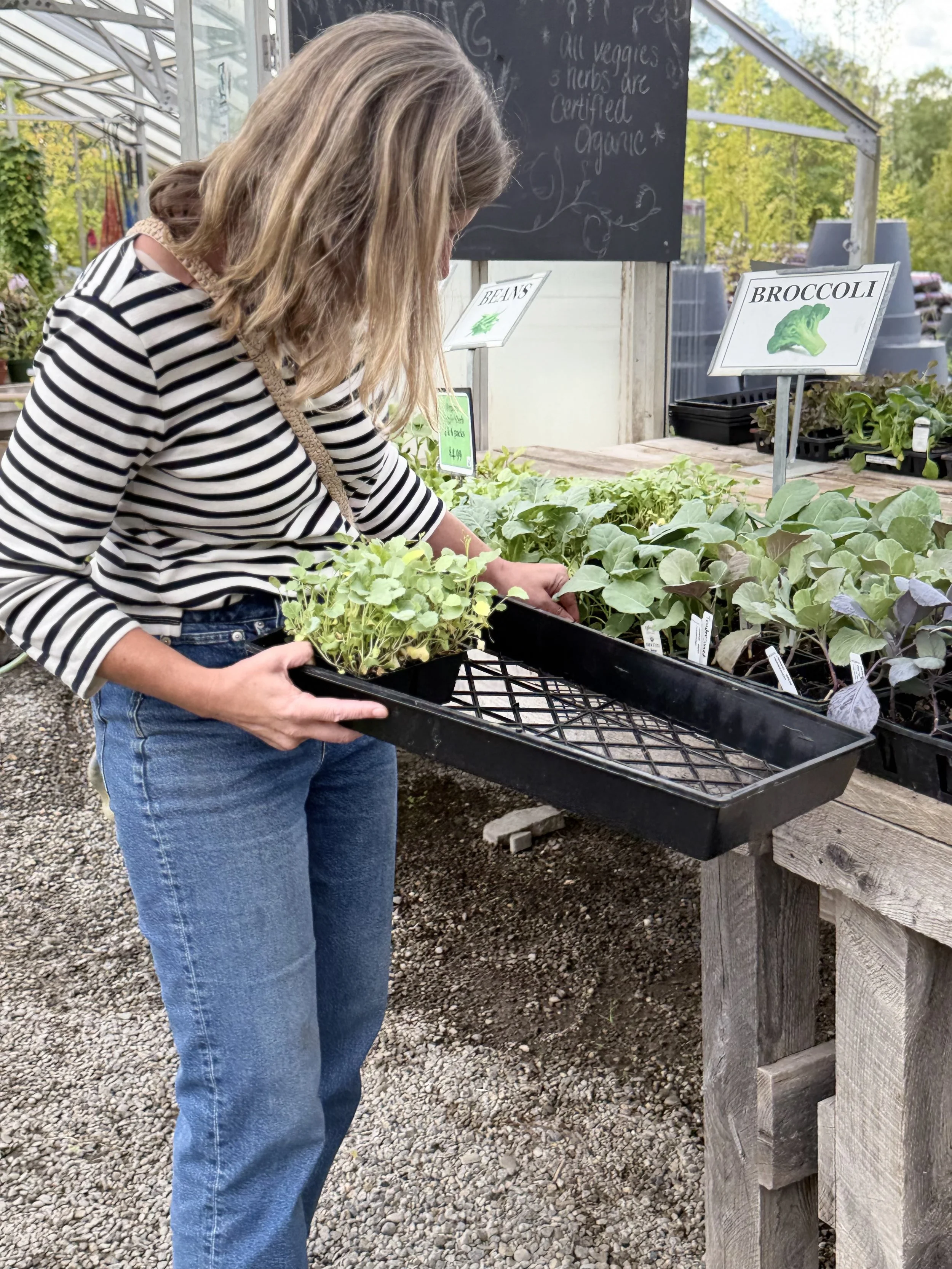
Here is how we approach our most popular spring veg and herbs:
Always seed
Root vegetables: carrots, beets, radishes, parsnips, turnips
Unless soil blocked: snap peas, sugar peas
Either
Fast-growing leafy greens like spinach and lettuces, cilantro, mizuna, and bok choy
Transplant list
Kale, chard, parsley, onions (sets), chives, scallions, leeks, broccoli, Brussels sprouts, cabbage, cauliflower, celery, kohlrabi, collards
For a full list of kitchen garden vegetables by season and plant size, download our free guide.

JOIN OUR VIRTUAL GARDEN CLUB!
A seasonal series for home vegetable gardeners growing organic food with care, with monthly live calls offering guidance for more flavorful harvests, more resilient gardens, all with greater ease. We look forward to seeing you for the upcoming season.
Explore the Beneficial Kitchen Garden Club →